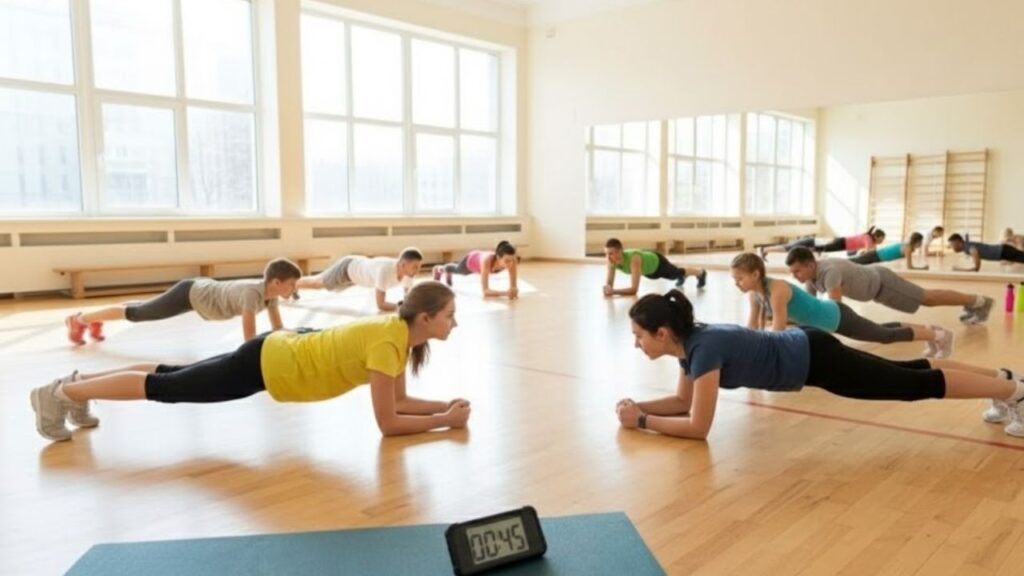
One of the best exercises for building a strong and stable core is the plank. People who are into fitness all over the US often use this simple bodyweight move to improve their posture, build muscle, and help them move around every day. But one question that always comes up is, “How long should you really hold a plank to see real results?” It depends on how fit you are, how well you can control your body, and what your fitness goals are. Knowing how long to hold a plank can help you avoid hurting yourself while still getting the most out of your workout.
How to Time Your Plank Hold for Stronger Core
When it comes to plank hold timing, quality is much more important than endurance. A lot of beginners think the goal is to hold a plank for a few minutes, but the real goal is to keep your spine in a neutral position and your breathing steady. Experts in fitness say that you should start with shorter holds and work your way up to longer ones. When you do a plank correctly, it works your abs, shoulders, and glutes, among other muscles. Not pain, but controlled tension is the goal. Keeping a steady breathing rhythm also helps keep the body stable and stops it from getting too much strain. A well-done thirty-second plank can be very effective if you do it every day.
How Long Should Beginners Hold a Plank?
If you’re new to working out, it’s usually best to hold a plank for a shorter amount of time. A lot of trainers in the US say to start with 15 to 30 seconds and do several sets of them. This gives your muscles time to adjust without pushing them too hard too soon. Focusing on “beginner core stability” helps you get stronger while also improving your posture and balance. You can gradually increase your initial hold duration as you get more comfortable, as long as you keep good form. Don’t let your hips sag or your shoulders drop, as this makes the foundation strength exercise less effective. When done regularly, the plank becomes a great bodyweight endurance drill.

Advanced Plank Hold Duration for Maximum Results
Plank hold duration can be longer than a minute for people who are used to working out and still have good form. A lot of trainers say that to really challenge your core, you should aim for 60 to 90 seconds per set. At this point, the focus changes to advanced core endurance and total body tension. Keeping a strong abdominal brace in place supports the spine while keeping the shoulders and glutes active. To make things harder, advanced athletes often add variations like side planks or weighted planks. This progression turns the plank into a very challenging full body stability exercise that helps with posture and functional movement. It also improves athletic performance support over time.
How to Understand the Best Plank Strategy
Instead of just trying to get longer times, the best plank routine focuses on doing it right and being consistent. A lot of trainers in the US say that it’s better to do several shorter sets than one very long hold. This method helps keep your muscles tense while also making you less tired, which can hurt your posture. If you pay attention to your body and focus on safe exercise progression, you can build strength slowly without getting hurt. When you pay attention to your alignment, breathing, and control while doing a plank, it becomes a strong core stability foundation. Over time, this simple movement helps you stand up straighter, balance better, and move around more efficiently every day.
The table below shows the recommended hold time, number of sets, and goal for each level of experience.
Common Questions (FAQs)
1. How long should a beginner stay in a plank?
Beginners should start with 15 to 30 seconds per plank and pay attention to how they do it.

2. Is it good to hold a plank for two minutes?
If you do it right, a two minute plank is a good way to build core strength.
3. How many sets of planks should I do every day?
Most fitness experts say that three to five sets are best, depending on how fit you are.
4. Do planks really make the core stronger?
Yes planks work the abs, shoulders, and glutes to make the core stronger.