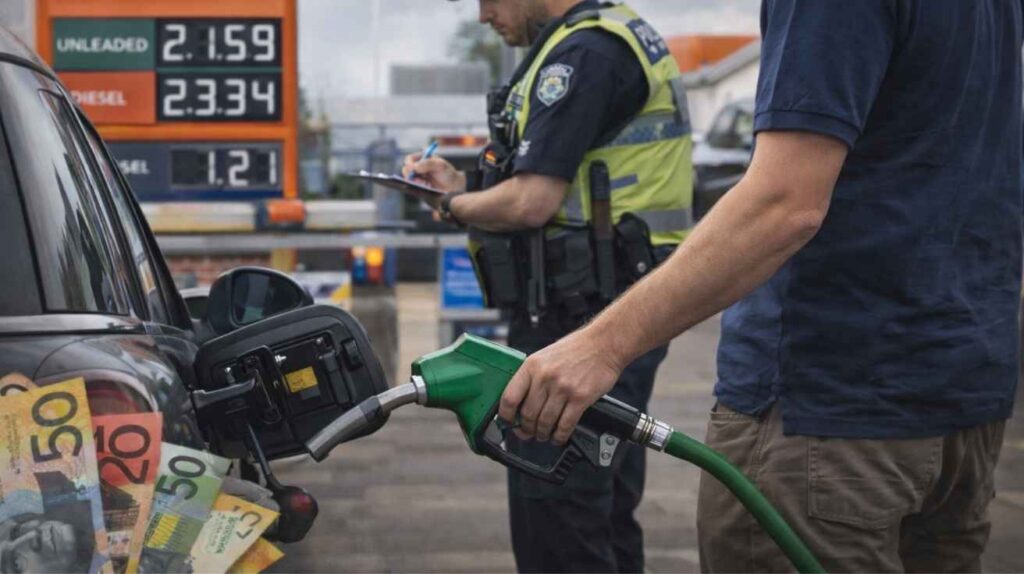
In Victoria, Australia, a major modification to fuel pricing regulations went into effect today. Fuel prices must now be publicly reported by gas stations in the state one day prior to their implementation, and noncompliance carries severe penalties. The new regulations are a part of a larger plan to improve fuel affordability and transparency for drivers, particularly in light of rising oil prices worldwide.
New Regulations Require Daily Price Reporting
As of right now, gas stations in Victoria must report their maximum fuel prices by 2:00 PM every day for the subsequent day. As a result, drivers won’t have to speculate or be taken by surprise when prices change. Prices cannot be increased during the 24-hour period that the caps will be in effect, from 6 a.m. to 6 a.m. the following day.
The new regulations, which were approved by parliament in November 2025, are intended to give consumers clarity. It is anticipated that the changes will provide drivers with more consistent pricing because over 1,500 fuel retailers in the state are participating in this mandatory reporting system. Customers can check fuel prices for the following day on the Service Victoria website by 4 p.m. every day. Failure to comply will result in fines of $3,000.

Retailers who disregard the new regulations will be subject to severe penalties, according to the Victorian government. Fines of up to $3,000 may be imposed on gas stations that fail to report prices or violate the cap. Retailers who are prosecuted for violating the new regulations may also be found guilty and subject to fines exceeding $24,000.
In light of the growing cost of living, the action is intended to assist Australian families in saving money on gasoline. These new regulations are anticipated to bring much-needed stability as prices fluctuate due to a combination of supply chain problems and international tensions.
“Aiding Drivers, Not Penalizing Retailers”
The goal of the new regulations, according to Victorian Premier Jacinta Allan, is to help customers rather than penalize retailers. She emphasized in her statement that the objective is to provide families, who frequently find themselves at the mercy of changes in fuel prices, with greater transparency and control.
“This is about helping drivers, not punishing retailers,” Allan stated. With the ability to compare prices in real time and make better decisions about where to fill up, the new system seeks to empower consumers.
NRMA Applauds the New Framework
The new rules have been applauded by the National Roads and Motorists’ Association (NRMA), which described them as an improvement for Australian families. According to NRMA spokesperson Peter Khoury, the new regulations will boost customers’ confidence at the bowser. Families will now have access to real-time fuel prices at all service stations, eliminating the need for them to guess where to fill up.
Khoury emphasized that by making fuel price information available throughout the state, this change would benefit not only Melbourne but also regional Victoria. “Families in Melbourne and regional Victoria will benefit equally from this,” he declared.
Worries About the Effect on Fuel Competition
Although most people support the requirement for price reporting, there are worries about how it might affect fuel market competition. While endorsing the new system, the Australasian Convenience and Petroleum Marketers Association (ACAPMA) expressed disapproval of the legislation’s price freeze clause.

While giving consumers timely access to accurate fuel price information is a worthwhile goal, price freezes run the risk of unintentionally decreasing competition, according to ACAPMA CEO Mark McKenzie. He cautioned that if retailers are unable to modify prices in response to market conditions, such actions may eventually result in higher average fuel prices.
Rise in Gas Prices Amid International Unrest
The new fuel pricing regulations are implemented at a time when international events are driving up gas prices in Australia. Petrol prices have risen above $100 per barrel for the first time in more than three years due to the closure of the Strait of Hormuz, a vital oil shipping route. Due to this increase, gas stations all over the nation are running low on inventory; in some rural areas, rationing has even been implemented.
These supply disruptions have been exacerbated by the ongoing conflict in the Middle East, leaving Australian drivers uncertain about the availability of gasoline in the future. As a result, some drivers have been charged with hoarding gasoline, which has increased demand and raised prices even more.
Demands Government Response to Fuel Scarcity
Calls for government action are growing as gas prices keep rising and shortages start to occur. Prime Minister Anthony Albanese has been urged by Tamworth-based petrol company Transwest Fuels to address the problems with fuel supply. Videos of drivers filling plastic containers with gasoline are circulating on social media, exacerbating the fuel crisis.
In order to make sure that service stations are not abusing the current situation, Treasurer Jim Chalmers has written to the Australian Competition and Consumer Commission (ACCC) expressing his concerns. Petrol companies that break consumer and competition laws will face consequences, according to the ACCC.
In conclusion
Victoria’s new fuel price reporting regulations mark a substantial change in the way the state handles gasoline pricing. These modifications are intended to assist Australian drivers in navigating rising fuel prices, with fines for non-compliance and a clear focus on affordability and transparency. Although most people applaud the move, there are still worries about how it might affect market competition.
The government’s new regulations offer consumers a crucial safety net as fuel supply chains continue to be disrupted by international tensions and prices rise. The new system helps level the playing field and offers much-needed relief during uncertain times by giving families more control over their fuel costs.