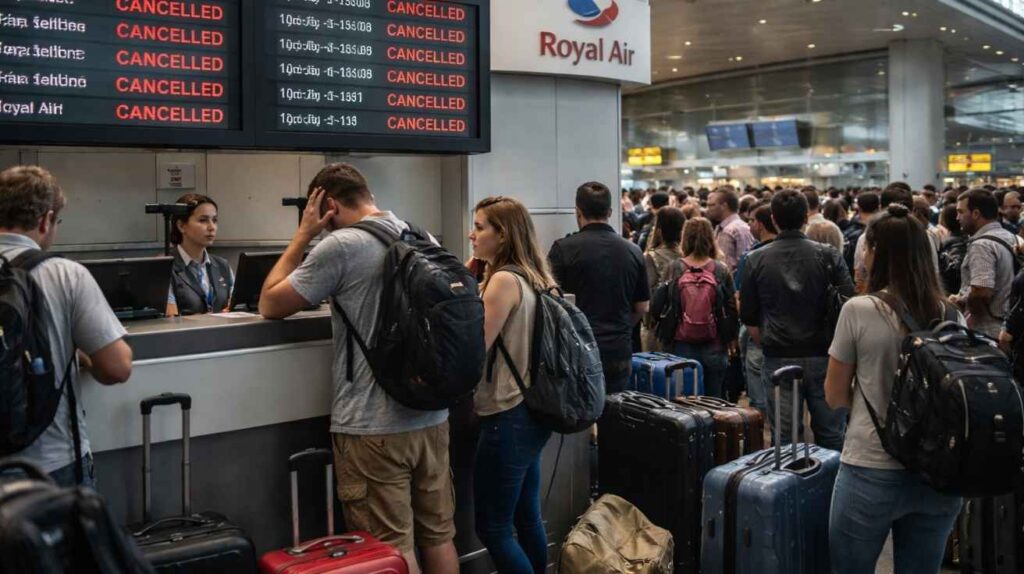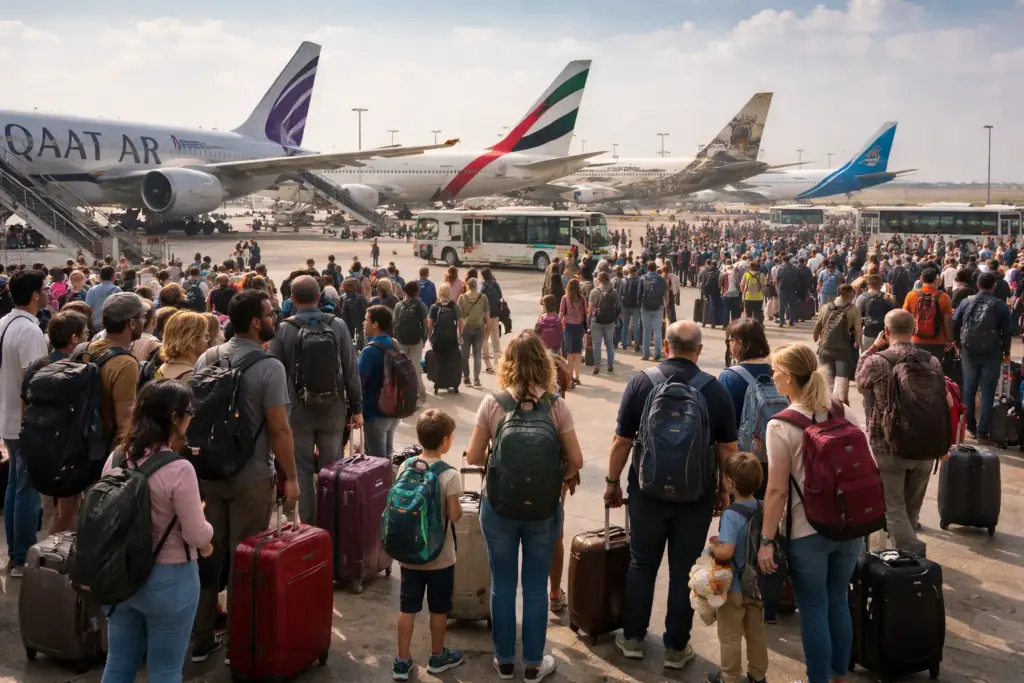
Tensions in the Middle East have been rising recently, which has caused travel problems for thousands of international travelers at key transit hubs in the region. Travelers were stuck in limbo because of airspace problems and sudden flight cancellations, which made it impossible for them to get to their destinations. In a remarkable show of global solidarity several countries have stepped up to help these travelers by providing emergency housing extending their visas, and sending them home on flights. Major airlines like Qatar Airways, Emirates, Etihad Airways, and IndiGo have teamed up to send sixty repatriation flights to help thousands of people get home. The work of countries like the UK, the US, Canada, Spain, Germany, and others shows how important it is for countries to work together during times of crisis.
A Global Effort That Works Together
When tensions in the Middle East rose, travel became chaotic because of airspace restrictions and safety worries. Because of this, airports in the Gulf region, such as those in the UAE, Oman, and Saudi Arabia, were flooded with travelers who were stuck. For a lot of people, these transit hubs turned into unexpected holding points, where they had to wait for the situation to get better and deal with delays and uncertainty.
Governments and airlines quickly got to work to help the passengers who were affected. For example, in the UAE, emergency hospitality measures were put in place to help travelers who were stuck by giving them free hotel rooms and meals. At the same time, Sri Lanka and Oman pushed back the deadlines for visas to make sure that no visitors would be left without legal status. Turkey, Qatar, and Bahrain also helped out by providing transit help so that passengers could continue their trip when flights resumed.

Repatriation flights are led by airlines.
Major airlines in the area have been very important in bringing back connectivity. Despite the tense political situation, Qatar Airways, a major airline in the Gulf, kept flying to and from Hamad International Airport in Doha. Between 7:00 AM and 9:00 AM local time on March 8, 2026, several long-haul flights from cities around the world, including London, Paris, Madrid, Frankfurt, and Bangkok, safely landed in Doha. These flights were important for keeping international travel going and gave travelers peace of mind that the region’s main transit hubs were still open.
Emirates Airlines which is based in Dubai, also kept its full schedule of flights, with departures to Europe, North America, and Asia. The airline changed flight paths and kept a close eye on airspace conditions, even though there were risks in the airspace. Emirates flights left for places like New York, London, Paris, Frankfurt, and Manchester on the same day. Even though things were uncertain in the area, the airline’s efforts helped make sure that Dubai stayed an important stop for travelers from all over the world.
Etihad Airways which has its main hub in Abu Dhabi, also kept connecting people between India and the Gulf. The airline’s flights between Mumbai and Hyderabad and Abu Dhabi, as well as other regional flights to Muscat, were important for keeping business and tourist travelers moving between India and the Middle East. These airlines’ ongoing operations show how strong the region’s aviation network is in tough times.
IndiGo Grows Its Business During the Crisis
IndiGo an Indian airline that has quickly grown its international network, played a big part in helping travelers stuck in the Middle East travel crisis. IndiGo had many flights from major Indian cities like Mumbai, Delhi, Hyderabad, Bengaluru, and Kozhikode that connected passengers to places all over Europe, the Middle East, and beyond. London, Amsterdam, Abu Dhabi, Dubai, and Jeddah were some of the most important routes.
IndiGo’s network is especially important for connecting India to the Gulf region, which is still a major hub for Indian expats and religious pilgrims. Flights to cities like Jeddah and Medina are especially important because they carry a lot of Indian pilgrims going to Saudi Arabia. IndiGo helped keep international travel connections going by keeping these routes open and expanding their operations, even though there were problems in the region.
Help for people in need during the crisis
The crisis in the Middle East has also led to a lot of humanitarian support, with many countries stepping in to help. For example, Sri Lanka gave stranded travelers visa extensions so they could legally stay in the country while they waited for their flights. Also, the Sri Lankan government and local businesses set up free hotel rooms and meals for tourists.
In other parts of the Middle East, like Bahrain and Qatar, emergency transit measures were put in place to make it easier for travelers who were stuck to move between countries. These steps included making it easier to get transit permits and giving people rides to other countries in the area. This quick action by local officials helped lessen the effect on tourists and made sure they were taken care of during a time of uncertainty.
 P-Plate Drivers Face Immediate Suspension Under Tough New Rule – Roller Ski Australia News
Also, Turkish officials worked with international airlines to find other ways for travelers who were stuck at airports to get to their destinations. The Turkish government’s efforts to help foreigners show how countries can work together in emergencies that happen while people are traveling around the world. Thanks to the help of several governments, travelers who were stuck got the help they needed, so they didn’t have to go without shelter food or legal status.
Dealing with the ongoing problems
Repatriation flights and humanitarian measures are helping to deal with the immediate crisis, but travel problems in the Middle East are still having an effect on air travel around the world. Airlines are keeping a close eye on the state of the airspace and changing flight paths as needed. The crisis has also shown how easily geopolitical events can affect global travel networks.
The travel industry is adjusting to the new reality by making plans for rerouting flights and keeping passengers safe as tensions in the region continue to rise. The situation should get better in the next few weeks, but the effects of the crisis will probably last for a while, especially when it comes to flight delays and cancellations.
Even though there are problems, the work that airlines governments and humanitarian groups are doing gives us hope that international travel can start up again without any more problems. These groups are not only making sure that stranded travelers can get home safely, but they are also helping to rebuild trust in global travel networks by working together.
The Importance of Working Together with Other Countries
The travel crisis in the Middle East has shown how important it is for countries to work together in times of trouble. Airlines, governments, and local authorities have worked around the clock to help the thousands of travelers who were stuck because of political tensions. The repatriation flights started by Qatar Airways, Emirates, Etihad, and IndiGo show how quickly airlines can change their plans to help passengers in tough situations. Meanwhile, the quick actions taken by governments in the area, such as giving out emergency visas and finding places to stay, show how important it is to be kind and practical when dealing with crises.
The crisis has shown that when countries work together, global travel networks can handle even the most difficult geopolitical situations, even if the immediate disruption goes away. The aviation industry and governments around the world will work together to keep travelers safe and make sure that international travel can keep going even when things get tough.
Conclusion
The Middle East travel crisis is still causing problems for international flight networks, but the global efforts to help stranded travelers are a much-needed silver lining. Airlines like Qatar Airways, Emirates, Etihad Airways, and IndiGo, along with governments around the world, have been very important in providing repatriation flights and other important humanitarian aid. This response from many countries shows how important it is for countries to work together and how they can show compassion and come up with practical solutions in times of crisis. As things get better, the lessons learned from this crisis will probably have an effect on the future of global travel in a world where political tensions can break even the strongest systems.