For decades, covering grey hair usually meant choosing between strong chemical dyes or natural remedies that rarely delivered consistent results. Recently, however, a new trend has started gaining attention among people who want a gentler way to darken their greying strands. The method is surprisingly simple: adding an everyday kitchen ingredient to your regular conditioner.
Instead of relying on permanent color treatments, many people are experimenting with this softer approach that subtly darkens grey hair while keeping it healthy and conditioned.
Why Many People Are Moving Away From Chemical Hair Dyes
Grey hair appears when pigment-producing cells inside the hair follicles gradually slow down and stop producing melanin. Age plays a major role in this process, but stress, genetics, smoking, nutritional deficiencies, and certain health conditions can accelerate the change.

At first, the appearance of a few silver strands might seem minor. Over time, however, those strands spread across the scalp and become more noticeable. The common response has long been permanent or semi-permanent hair dye because it offers fast results. But repeated coloring sessions often bring several drawbacks.
Hair that has lost its pigment is typically drier, more fragile, and less flexible. Regular dyes can make these strands rougher and more prone to breakage. Frequent coloring strips away natural moisture, weakens the cuticle, and can make grey hair look dull instead of shiny.
Even products labeled “gentle” or “ammonia-free” still rely on chemical oxidation to alter the internal structure of hair. This process may not cause noticeable damage for younger, thicker hair, but it can feel very different for thinner or aging strands.
Natural alternatives such as henna or indigo attract people searching for plant-based solutions. However, these options also come with challenges. The final color often varies from person to person, tones may appear overly warm or dull, and correcting the result at a salon can be extremely difficult.
The Cocoa Conditioner Method That Is Gaining Attention
A simple beauty hack now circulating in hair care communities involves unsweetened cocoa powder — the same kind used for baking. Unlike sugary drink mixes, pure cocoa powder contains natural pigments and plant compounds that can lightly stain the surface of hair.
Cocoa does not function like permanent dye. Instead, it works as a gentle tint that gives grey strands a soft brown tone while simultaneously conditioning the hair.
The powder contains flavonoids and tannin-like compounds that attach to the outer surface of the hair shaft. When applied repeatedly to grey or very light hair, these pigments gradually create a mild darkening effect.
On darker hair, cocoa does not dramatically change the color but can add warmth and depth. In addition, cocoa offers several hair-friendly benefits. It contains antioxidant compounds that help protect strands from environmental damage and natural softening elements that improve hair texture.
Some dermatologists and stylists also point out that cocoa has mild astringent properties that can help balance scalp oil levels. When blended with conditioner, the result becomes a treatment that both nourishes and lightly tones the hair at the same time.
How to Mix Cocoa Powder Into Conditioner Properly
The technique itself is simple and inexpensive. It requires only a few everyday items and can easily be added to a normal hair care routine.
Use this treatment on freshly washed, towel-dried hair. Begin with once or twice per week.
Step-by-step method
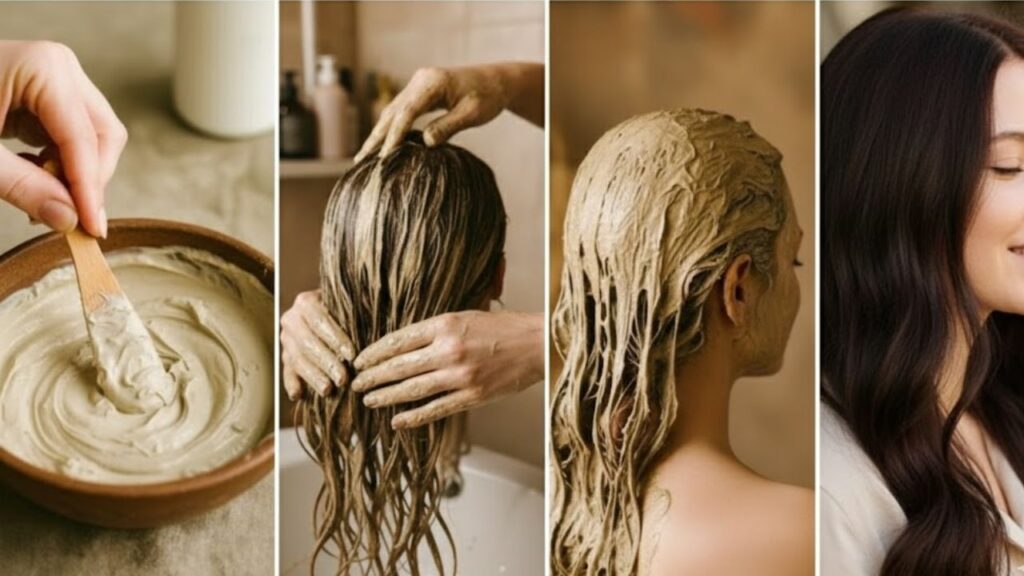
• Place a generous amount of your regular conditioner into a clean bowl.
• Choose a silicone-light or silicone-free conditioner if you want the pigment to attach more easily.
• Add about 2 to 4 tablespoons of unsweetened cocoa powder depending on the length and thickness of your hair.
• Stir slowly until the mixture becomes a thick, smooth chocolate-colored paste with no lumps.
• Section your hair using clips and apply the mixture evenly.
• Pay special attention to visible grey areas such as the temples, crown, and hair part.
• Use a wide-tooth comb to spread the mixture from roots to ends.
• Leave it on for approximately 20 minutes. Very resistant grey hair may benefit from extending the time to 30 minutes.
• Rinse thoroughly with lukewarm water while gently massaging the scalp to remove any cocoa residue.
After the first use, many people notice that bright white strands shift toward a cooler, smoky brown tone. The effect usually becomes deeper with repeated applications.
The goal is not to completely replace salon coloring in one session. Instead, the treatment softens the contrast between grey and natural hair color and creates a more blended appearance between coloring appointments.
Who Should Try This Method — And Who Should Avoid It
Cocoa-based conditioner works best for certain hair types and situations.
People who have a small number of scattered grey hairs often see the most visible improvement. It also works well for blondes and light brunettes whose grey strands stand out strongly against their natural shade.
Those with sensitive scalps who react poorly to chemical dyes may appreciate the gentler nature of this option. It is also suitable for individuals who prefer gradual changes instead of dramatic transformations.

However, people with very dark hair should not expect cocoa to completely cover grey roots. In these cases, the mixture usually produces only a subtle tint that softens the contrast rather than fully hiding grey strands.
| Hair Type | Likely Result After Cocoa Use |
|---|---|
| Mostly white or grey, fine strands | A gentle beige-brown tone appears and hair often looks smoother and shinier |
| Salt-and-pepper brown hair | Grey strands blend more easily and the overall shade appears softer |
| Dark brown or black hair with limited greys | Very mild color shift with a slight warm undertone |
How Cocoa Interacts With Grey Hair
Grey hair tends to feel rough because its outer protective layer — known as the cuticle — lifts more easily than pigmented hair. This raised structure allows moisture to escape and makes strands more prone to frizz and tangling.
Conditioner smooths this outer layer by coating the hair surface so individual strands can slide past each other more easily.
When cocoa powder is mixed into conditioner, its tiny particles and natural pigments settle onto the outside of the hair shaft. They remain on the surface rather than penetrating deep inside the strand.
Because of this surface-level effect, the color develops slowly over multiple applications. It fades gradually with washing rather than creating a sharp regrowth line like permanent dye.
You can imagine cocoa as forming a soft tinted coating on the hair’s surface. It provides light color enhancement and mild protection without permanently altering the hair structure.
Since this method does not involve oxidizing chemicals, the internal structure of the hair remains largely unchanged. For aging hair that tends to be dry and delicate, this can significantly improve softness and movement.
Cocoa Compared With Other Grey Hair Solutions
Cocoa powder is now part of a growing list of options for people who want to manage grey hair in a more flexible way.
Some individuals use herbal rinses made from coffee or black tea to stain grey hair temporarily. While these methods can create light color, frequent use may dry out the hair.
Others rely on tinted conditioners formulated specifically for brunettes or grey-blending salon treatments. Cocoa stands out because it is inexpensive, easy to find, and integrates naturally into a regular hair routine.
However, results may vary depending on hair color, texture, and the amount of product used. Using too much cocoa or failing to rinse thoroughly can sometimes leave hair looking slightly dull.
Additional Tips for Maintaining Healthy Grey Hair
Caring for greying hair involves more than just applying treatments. Dermatologists note that lifestyle choices can influence how quickly pigment loss appears.
Chronic stress and smoking can place pressure on pigment-producing cells. Excess sun exposure and diets lacking antioxidants may also accelerate greying.
People who experiment with cocoa treatments often adopt gentler hair care habits at the same time. These habits include using UV-protective sprays outdoors, reducing high-heat styling tools, spacing out hair washes, and using nourishing masks rich in lipids and proteins.
These practices help maintain hair strength and shine regardless of color.
For individuals who still prefer professional coloring, cocoa-based treatments can serve as a supportive step between salon appointments. Some stylists recommend homemade masks after coloring sessions to refresh tone and maintain shine without adding additional chemical processing.
Others view the cocoa method as a gradual bridge for clients who want to transition toward their natural grey while avoiding a harsh grow-out line.
Overall, this cocoa trend reflects a broader shift toward gentler hair care solutions. Instead of aggressively covering every grey strand, many people are choosing softer and reversible techniques that respect the natural changes occurring in their hair.