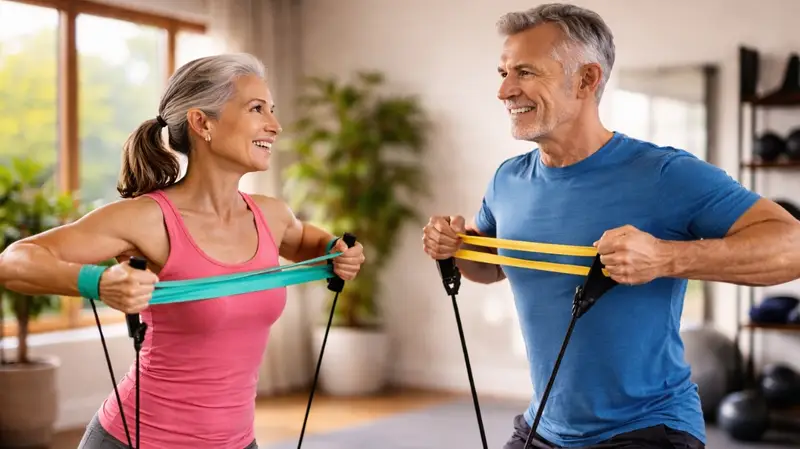
Many people assume that rebuilding arm strength later in life requires barbells or intense gym sessions. In reality, a few well-chosen standing exercises can stimulate muscle growth while keeping joints comfortable. When done regularly, these movements strengthen the arms and also improve daily tasks such as carrying groceries, opening heavy doors, or lifting household items.
Standing exercises are particularly helpful for older adults because they involve the whole body. Instead of isolating one joint under heavy load, they distribute effort across the shoulders, core, and upper back. This balanced approach allows muscles to work effectively without placing excessive strain on vulnerable joints.
Why Standing Exercises Work Well After Age 55
As the body ages, joints often become sensitive before muscles actually weaken. Traditional strength training can still be beneficial, but some people experience shoulder soreness, elbow discomfort, or stiffness in the lower back after heavy workouts.
 Signs You Might Be Eating More Sugar Than You Realise and What It Is Quietly Doing to Your Body
Standing movements provide a gentler alternative. When you remain upright, your body naturally activates the core and upper back to maintain balance. This stabilisation helps keep the shoulders aligned and encourages smoother movement patterns.
Another advantage is that standing exercises are easier to repeat frequently. Instead of occasional intense workouts, you can perform these movements consistently throughout the week, which is often more effective for building strength in later years.
Most of the exercises in this routine rely on resistance bands. Bands create smooth, controlled tension that increases gradually as they stretch. Unlike some free weights, they avoid sudden jerks or heavy compression on joints, making them easier for older shoulders and elbows to tolerate.
1. Wall Push-Ups: A Joint-Friendly Way to Build Arm Strength
Wall push-ups are a comfortable alternative to traditional floor push-ups. They work the triceps, chest, and shoulders without forcing you onto the ground or placing pressure on the wrists and neck.
Stand facing a wall with your hands placed around chest height and slightly wider than shoulder width. Step your feet backward until your body forms a straight line from head to heels. Bend your elbows to move your chest toward the wall, then push yourself back to the starting position.
Adjusting your foot distance changes the difficulty. Standing further away from the wall increases the challenge.
Main muscles: triceps, chest, front shoulders, core
Sets and reps: 3 sets of 10–15 repetitions with 45–60 seconds rest
Key tip: keep elbows angled slightly backward instead of flaring outward
If the exercise becomes too easy, slow down the lowering phase or move farther from the wall. More advanced individuals can progress to incline push-ups using a sturdy countertop.
2. Standing Resistance Band Curl for Stronger Biceps
Biceps curls do not require dumbbells to be effective. A resistance band can provide continuous tension throughout the entire movement, helping activate the muscles from start to finish.
Stand on the middle of the band with feet about hip-width apart. Hold each end with palms facing forward and arms straight. Keep your core engaged and elbows close to your sides while curling your hands toward your shoulders. Pause briefly at the top, then lower the band slowly.
Maintaining still elbows prevents body swinging and ensures the biceps perform most of the work.
Main muscles: biceps, forearms, upper-back stabilisers
Sets and reps: 3–4 sets of 12–15 repetitions with 45–60 seconds rest
Variation ideas: alternate arms, use a hammer grip, or slow the lowering phase
If your elbows feel sensitive, slightly shorten the range of motion and focus on smooth, controlled movement rather than speed.
3. Standing Band Tricep Extension for Arm Stability
Although many people prioritise biceps training, the triceps make up a larger portion of the upper arm. Strengthening them improves everyday actions such as pushing yourself up from a chair or pressing objects overhead.
Attach a resistance band above head level or hold it behind your head. Stand tall with elbows bent and pointing forward. Extend your arms until they are comfortably straight, squeeze the back of the arms, and then return slowly to the starting position.
Training triceps in a standing posture also encourages shoulder stability and better spinal alignment.
Main muscles: triceps, shoulders, core
Sets and reps: 3 sets of 12–15 repetitions with 45–60 seconds rest
Key tip: keep elbows close together instead of letting them move outward
If overhead positions feel uncomfortable, switch to a tricep kickback. Slightly hinge at the hips, keep the upper arm close to your body, and extend the elbow backward against the band.

4. Band Pull-Aparts to Improve Posture and Arm Strength
Rounded shoulders and a slouched upper back can limit how effectively the arms push and pull. Band pull-aparts strengthen the upper back muscles responsible for correcting posture.
Hold a resistance band in front of your chest with arms extended and palms facing down. Lower your shoulders and gently draw them back. Pull your hands apart until the band approaches your chest, pause briefly, and then return slowly.
Strengthening the upper back creates a stable base that allows the arms to perform better during other exercises.
Main muscles: rear shoulders, upper back, forearms, assisting biceps
Sets and reps: 3 sets of 15–20 repetitions with 30–45 seconds rest
Key tip: imagine squeezing a pencil between your shoulder blades
This exercise also works well as a warm-up or as a posture break during long periods of sitting.
5. Standing Resistance Band Row for Everyday Strength
Rows are among the most practical exercises because they replicate real-life movements such as pulling open heavy doors, lifting luggage, or carrying children.
Secure a resistance band at chest height. Stand facing the anchor and hold the ends with arms extended. Maintain a tall posture while pulling your elbows backward toward your ribs. Squeeze your shoulder blades together, pause briefly, and then extend your arms again.
Leading the motion with your elbows keeps the focus on the back and biceps instead of the wrists.
| Focus | Details |
|---|---|
| Main muscles | Upper back, biceps, rear shoulders, core stabilisers |
| Typical volume | 3–4 sets of 10–15 repetitions |
| Rest time | 45–60 seconds between sets |
| Progression | Step farther back to increase resistance |
| Advanced option | Perform single-arm rows for greater challenge |
How Often to Train and How Hard to Work
Muscles still respond well to training after age 55, but they usually benefit more from consistency than extreme effort. Performing arm exercises two or three times each week is enough for most people, especially when combined with regular movement such as walking.
Avoid pushing every set to complete exhaustion. Instead, stop with one to three repetitions left in reserve. This approach reduces soreness while allowing steady progress.
Use a controlled pace during each movement. Lifting for about two seconds and lowering for two to three seconds helps maintain tension and improves muscle engagement.
Always pay attention to joint signals. Mild muscle fatigue is normal, but sharp or persistent joint pain is a sign to adjust the exercise or reduce intensity.
Supporting Strength Gains Through Daily Habits
Exercise alone does not build muscle. Recovery, nutrition, and sleep all play important roles in the process.
Protein intake becomes particularly important with age because the body’s ability to maintain muscle gradually decreases. Try to include protein sources in every meal such as eggs, yoghurt, fish, beans, or lean meat.
Hydration also supports muscle performance and recovery. Drinking enough water throughout the day helps prevent fatigue and improves overall strength.
Sleep quality strongly affects progress as well. Even small improvements, like going to bed slightly earlier or maintaining a regular sleep schedule, can support recovery and reduce injury risk.
What Progress May Look Like Over Time
Strength improvements later in life are usually measured by better function rather than dramatic muscle size. Everyday activities begin to feel easier, such as carrying groceries, lifting luggage, or standing up from the floor.
Many people notice stronger arms and improved muscle tone within six to eight weeks of consistent training. Grip strength may also improve, which research often links with better overall health and longevity in older adults.