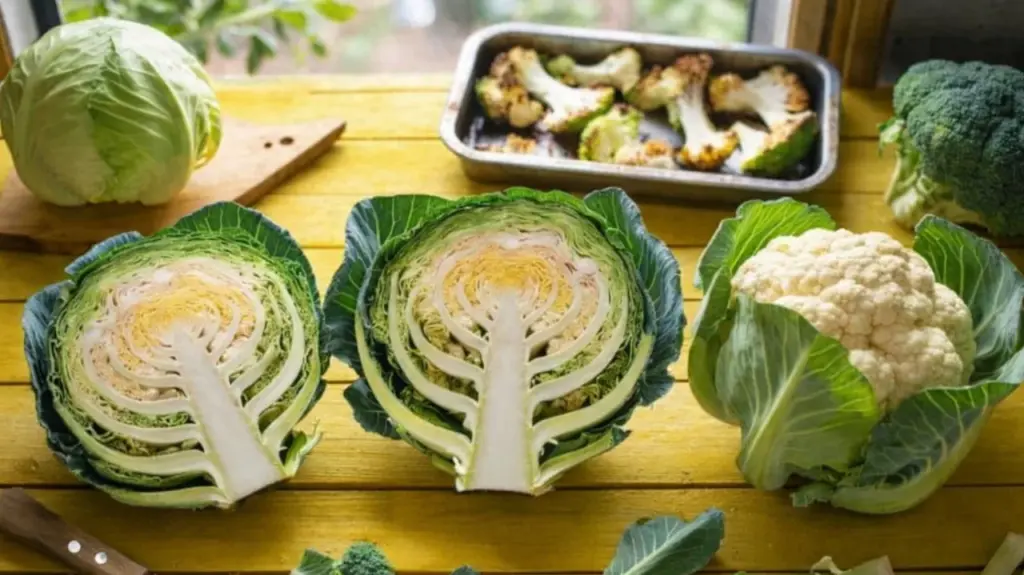
On a Tuesday night in a busy grocery store, I noticed a young woman park her cart in front of the vegetables. It was one of those typical evenings when people dash through the aisles, stuffing their baskets with what they think are wise selections for the week. For her “detox salad,” she grabbed a large head of cauliflower, a bag of chopped broccoli, and some shredded cabbage. Low-carb protein-friendly and gut-healing are three distinct products with three different prices and labels in her mind. She scanned the barcodes on a diet app on her phone, scowled, and gave it some thought.
The fact that all three came from the same kind of plant was unknown to everyone else. They felt like entirely different foods because of the labels, the packaging, and even the colours.
What she bought, what she considered to be “healthy,” and what she planned to prepare for the week were all subtly influenced by that one little fact about plants. You can see how potent this illusion is when you multiply that minor misconception by the millions of customers who shop in supermarkets every day.
 Say Goodbye to Sleepless Nights With 5 Simple Yoga Poses That Calm Your Nervous System Naturally
One tiny error multiplied by millions of plates. Additionally, it influences how a culture defines variety and nutrition when it is repeated week after week.
One plant, three “foods”: everyone’s major blind spot
As children, we believed that cabbage, broccoli, and cauliflower belonged to three distinct families. They were prepared differently at home, had slightly different tastes, and appeared different on the plate. We arranged them as follows: cabbage serves as the foundation for the uninteresting coleslaw base, broccoli is the protein rich sidekick, and cauliflower is the low carb hero. For each one, we created short nutritional narratives.
However, botanists will tell you something that may seem confusing: they are all the same plant Brassica oleracea. Just various components that, through selective breeding over hundreds of years, people have selected and blown up. One was shaped for its thick stem structure, another for its leaves, and still another for its flower bud clusters. Our tastes changed, but the plant remained unchanged.
Understanding that alters your perspective on the entire diet scene. All of a sudden, what appeared to be diversity begins to resemble repetition while dressed differently.
Consider a “healthy reset” for a week. Meal prep boxes containing cauliflower rice for fat loss goals, grilled chicken with broccoli for muscle fuel meals, and red cabbage salad for gut health and antioxidants are shared by a fitness influencer online. For social media appeal, three roles three colours, and three hashtags were carefully selected.
Thousands of followers copy and paste the grocery list mindlessly. They purchase a branded pack of cauliflower rice packets, a plastic bag of pre cut broccoli florets, and a bag of rainbow slaw mix. Variety and health conscious discipline are evident in the receipt.
However, genetically, they only had to pay three times as much for the same plant species, which had undergone decades of astute marketing strategies and centuries of farming to take on various visible forms. There is a powerful lucrative illusion of difference.
This is how the trick operates. Our brains have a tendency to categorise things, such as this food for energy, that food for bloating, and that food for weight loss. We seldom question labels because they facilitate decision making. Food companies divide reality along these lines because they are aware of this.
The majority of the basic nutritional profile of cauliflower, broccoli, and cabbage is similar, including fibre vitamin C, vitamin K, folate, and glucosinolates. Though not as significant as diet culture frequently implies, there are variations in quantity and texture. We are frequently circling the same ground when we switch between them in the mistaken belief that we are exploring new nutritional territory.
The miscommunication causes more than just confusion. It restricts our understanding of what “eating varied vegetables” actually entails and subtly shifts our spending toward goods that merely appear varied in the bowl. Although the plate appears colourful enough, there is still little species diversity.
Putting real diversity on your plate instead of fake variety
One easy, almost boring way to avoid this trap is to think of cauliflower, broccoli, and cabbage as one plant many shapes when you plan your meals. Consider them members of the same family group rather than counting them separately. Then pose a fresh curious question: which other plant families am I completely overlooking?
 5 Signs Your Body Is in Stress Mode and What These Silent Warning Signals Mean for Your Health
Trade one cruciferous side for carrots, another for leafy greens varieties, and a third for beans or lentils in place of three cruciferous sides in one day. It has nothing to do with labelling foods as good or bad or outlawing anything completely. It’s about identifying when you’re merely eating the same thing while dressing differently and labelling that as diversity.
Your shopping list becomes more honest and your nutrients become more balanced once you begin to see Brassica oleracea as a single family. You start to notice hidden gaps: perhaps you don’t often eat root vegetables legumes, or other non-green produce.
The biggest mistake most people make is feeling good about themselves because they ate loads of veggies, even though 80 percent of those veggies are members of the single Brassica family, which includes kale chips, cauliflower mash, broccoli soup, and cabbage salad. The brain confidently checks the variety box quickly because it appears colourful enough to satisfy the eye.
We’ve all experienced the realisation that your ostensibly varied meals are based on the same few ingredients. You need perspective, not guilt. More than any trendy superfood hype, a small mental adjustment can subtly enhance your plate.
To be honest, no one actually completely changes their diet in a single day. However, the nutrient picture is already significantly altered by substituting just one portion of Brassica per day with a completely different plant. These little changes add up gradually over time.
A nutritionist once remarked, “Most modern diets overrate variety in branding and underrate variety in species.” “People believe they eat twelve meals daily, but in reality, they eat four meals in twelve costumes.”
- Count the number of plants on your plate that are members of the same species or botanical family. Rotate by family, not by shape.
- Use one Brassica per meal: If you have broccoli, avoid eating cabbage and cauliflower at the same time.
- Chase colour from various plants: green from spinach or herbs, red from beets or tomatoes, and orange from squash or carrots.
- Change roles instead: Instead of using cauliflower rice or broccoli sides, use beans or lentils.
- Pay attention to the labels: Treat the same base vegetable as one, not five, when it appears in superfood branding trends.
Knowing what you actually eat has a quiet power
You can’t unsee the fact that cabbage, broccoli, and cauliflower are siblings from the same plant. Suddenly, your refrigerator appears a little less varied than you anticipated. The genetic origin of your detox salad base, low carb base, and high fiber side is the same.
They are not bad because of this. These vegetables are inexpensive nutrient dense, and adaptable. However, it dispels the notion that consuming them all in a single day represents an extreme variation. Because it offers you three products rather than just one: discover what’s truly on your plate, the diet industry profits from this delusion.
You don’t need to track every micronutrient or become a botanist to use this new dietary lens. When you shop or cook, it just poses a gentler more truthful question: am I using the same plant out of habit comfort or marketing influence?
One evening, you might use chickpea crust instead of cauliflower crust base. Another day, you sauté green beans with garlic instead of the broccoli side. Another night, you replace the cabbage based salad with lentils. Small, nearly undetectable changes, but over the course of weeks, your body meets new fibres gradually, your gut bacteria meet new foods regularly, and your budget subtly benefits as well.
What would happen if more people began eating this way, focusing on species and families instead of trendy marketing labels? We would rely more on true plant diversity and less on miracle foods. We would see that the concept of healthy eating patterns is based on showcasing numerous modest plants rather than worshipping a single highly marketed plant in seven different forms.
Of course, the trio of cauliflower, broccoli, and cabbage will still be on your table. It’s just not the lead role every night. When you learn the truth, you can rewrite the story your plate tells about what you think is different with greater awareness intention, and balance.