When anger rises it usually doesn’t come quietly; it comes in waves. Your chest and face get hot, your jaw gets tight, your breathing gets shallow, and before you know it, you might do things that you wish you hadn’t done.
From a physiological standpoint experiencing a “hot-headed” sensation is an inherent stress response of the body. When you get angry, your sympathetic nervous system kicks in, which makes your heart rate go up, your blood pressure go up, and your core body temperature go up.
According to the ancient sister science of yoga, anger is a sign of too much pitta. This dosha is all about fire, intensity, ambition, and change. When pitta gets too high, feelings like anger, competitiveness, and sharp criticism can quickly come to the surface.

Ayurveda and modern science both point to the same answer take a deep breath, hold it for a moment, and then react. Yoga is a structured way to do just that.
How doing yoga for anger calms you down
Studies show that slow breathing forward bends, and being still while being aware of your surroundings can help control the autonomic nervous system. These activities help the parasympathetic system work, which is the “rest-and-digest” state that counteracts the stress response Lengthening the exhalation activates the vagus nerve which tells the body to lower its heart rate and get back to normal.
Ayurvedic wisdom gives us more ways to cool down and calm our emotions. This internal cleansing is in line with the yogic principle of saucha, which means cleanliness and goes beyond physical hygiene to include clearing mental and emotional impurities. The goal is not to keep anger from coming out, but to let it flow through you without getting stuck.
When you don’t let your anger out, it builds up. Little things start to feel like too much. Moving with awareness lets go, and being still in each pose teaches you how to stop. This practice helps you stay calm over time. You take longer to respond, calm down faster, and feel more grounded when things get tough.
Keep in mind that anger is not who you are; it’s information Yoga doesn’t get rid of anger; it makes room for it. In that space, you have the power to respond with clarity instead of impulse.
Five Ways to Use Yoga to Deal with Anger
All yoga poses help you develop svadhyaya which is the ability to watch your thoughts and feelings without immediately identifying with them. These poses are especially helpful when things get too intense. Along with physical release they tell you to focus on your breath and watch your feelings without letting them take over.
1. Ardha Matsyendrasana, or Half Spinal Twist
Twisting poses help get rid of both physical and emotional stress. According to yogic tradition anger often builds up in the chest and middle back. Twists help you breathe steadily and release tightness, which clears your mind.
How to Sit down with your legs straight. Put your left foot outside your right thigh and bend your left knee. Don’t bend your right leg Take a deep breath to stretch your spine. Exhale and turn to the left, bringing your right elbow outside of your left knee. Put your left hand behind you to help you. Relax your shoulders. Take a few breaths, then switch sides.
Focus on Don’t hold your breath. As you breathe out, picture squeezing the tension out of your rib cage tension.
2. Prasarita Padottanasana, or the wide-legged standing forward bend
When you’re really angry, putting your head below your heart can help calm your nervous system The wide stance gives you more stability when you feel overwhelmed.
How to Stand with your feet 3 to 4 feet apart and your toes pointing slightly in. Breathe in to stretch your spine. Exhale and bend at the hips, bringing your body forward slowly. Put your hands on the floor, blocks, or ankles. Let your head hang down.
 6 Best Yoga Poses That Build Strong Toned Arms Naturally Without Weights or Intense Gym Workouts
Focus on Picture your anger and frustration flowing out of your head and shoulders and into the ground.
3. Baddha Konasana, or Bound Angle Pose
According to yoga philosophy the hips hold on to emotions that have been pushed down inside. This grounding position helps ease tension in the pelvic area and lower anxiety levels.
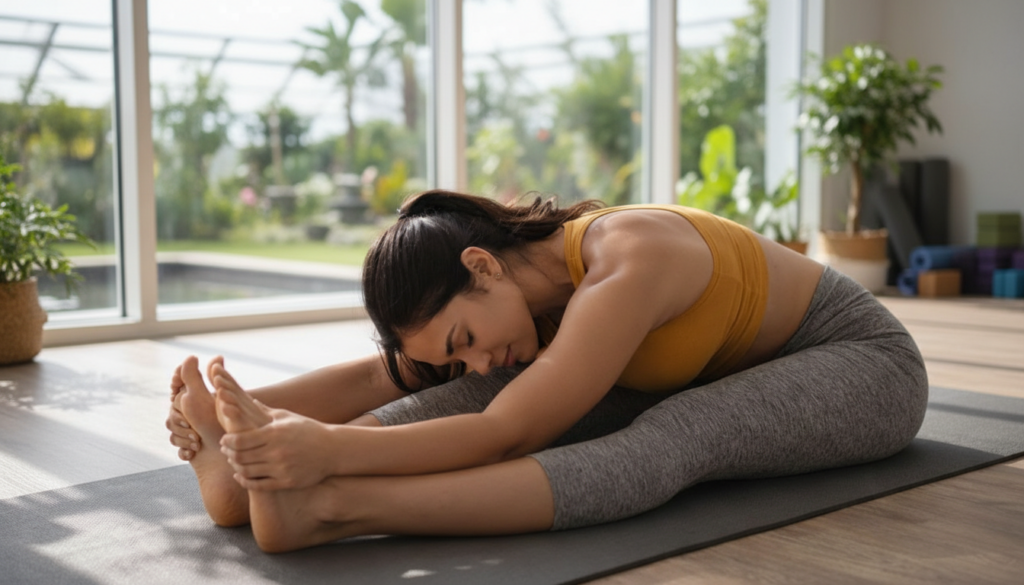
How to Sit with your legs straight. Bring the soles of your feet together and bend your knees. Keep your feet or ankles in place. Stretch through the spine. Stand up straight or slowly fold forward.
Soften the inner thighs is the main thing to do. Let gravity help instead of making the stretch happen.
4. Padmasana, or Lotus Pose
This symmetrical seated position helps you stay stable and contained, which lets you watch your anger without acting on it.
How to Sit with your legs straight. Put your right foot on your left thigh, with your heel pointing toward your belly button. Do it again, this time with your left foot on your right thigh. Put your hands on your knees. If it’s too uncomfortable, sit with your legs crossed instead.
Focus on Pay attention to how still your body is. Let that steadiness hold your thoughts in place.
5. Savasana, or corpse pose
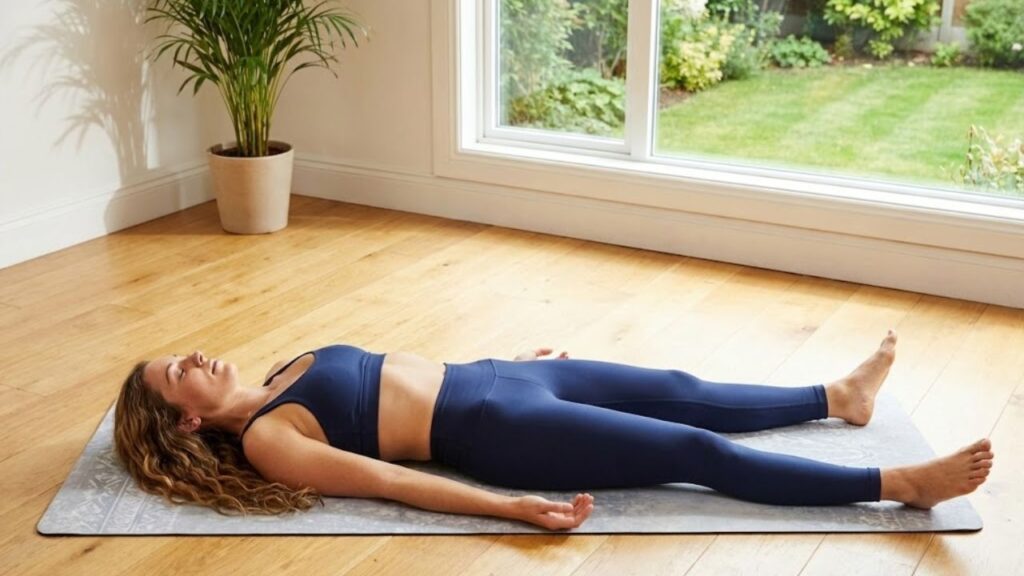
Savasana means giving up everything. This pose helps you relax and cool down emotionally after releasing tension slowly.
How to Lie on your back. Move your legs out a little bit wider than your hips. Palms facing up, arms rest next to your body.
Focus on Look at your body from your toes to your forehead. Relax your jaw shoulders belly, and hips. Let go of the need to fix things. Let the breath come back on its own. Notice how quiet it is after your anger has cooled down.
You can teach your nervous system to stop and think before acting by practicing regularly over time. That break gives you strength.